When Was Pinterest Created? History, Visual Discovery & Social Sharing Platform
Here’s a draft of the opening paragraph, designed to meet your SEO requirements:
Unlocking the secrets of Pinterest’s origin story is crucial for understanding its impact on social media, visual discovery, and e-commerce. This Blog post delves into the platform’s inception, exploring the key milestones that shaped its rise. We’ll uncover the answer to the question “when was pinterest created?”, examining the specific creation date, the founders behind the platform, and the initial concept that fueled its development. Join us as we journey back to explore the timeline, understanding the evolution of Pinterest and its lasting influence on the digital landscape from its creation to today’s trends.
The Genesis of Pinterest: Unveiling the Creation Date
The creation date of Pinterest marks the beginning of a visual discovery revolution, officially launching in March 2010. While the concept germinated earlier, it was in March that the platform became accessible to a wider audience, forever changing how people discover and share inspiration online.
Pinterest didn’t emerge overnight; its roots trace back to earlier projects by founders Ben Silbermann, Evan Sharp, and Paul Sciarra.
- 2009: The initial idea was “Tote,” an app for collecting favorite items.
- Early 2010: Tote morphed into a pinboard-style website called Pinterest.
- March 2010: Pinterest was officially launched in beta as a closed social network.
This careful, iterative approach laid the groundwork for Pinterest’s eventual success. The team began with a small group of users and gradually expanded access as the platform evolved.
The March 2010 launch wasn’t about immediate mass adoption, but rather cultivating a dedicated community and refining the platform based on user feedback. This strategic approach proved instrumental in shaping Pinterest into the visually rich, highly engaging platform it is today.
Behind the Scenes: The Visionaries and Driving Forces Behind Pinterest’s Launch
The creation of Pinterest, a now-ubiquitous platform for visual discovery, wasn’t a solo endeavor but rather the result of collaborative effort and shared vision, spearheaded by a trio of founders with complementary skills and a passion for connecting people through shared interests, which allowed it to become what it is today, and a leading platform in the social media landscape since when was pinterest created. This section delves into the driving forces and visionaries behind Pinterest’s launch, shedding light on their backgrounds, motivations, and the pivotal roles they played in shaping the platform’s early success.
Ben Silbermann, Evan Sharp, and Paul Sciarra formed the core team that brought Pinterest to life. Ben Silbermann, initially driven by a love for collecting, envisioned a platform where users could curate and share their interests in a visually appealing way; the collecting aspect was inspired by his childhood passion for collecting insects. Evan Sharp contributed his expertise in design and user experience, ensuring the platform was both aesthetically pleasing and intuitive to navigate. Paul Sciarra, with his background in finance, provided crucial business acumen and helped secure early funding.
The initial spark for Pinterest arose from Silbermann’s earlier venture, Tote, a shopping app that failed to gain traction. Recognizing the users’ tendency to create and share collections of items within Tote, Silbermann pivoted, focusing on the curation aspect and laying the groundwork for what would become Pinterest. The core idea was to create a virtual pinboard where users could organize and share things they loved, mirroring the physical act of pinning images and ideas onto a bulletin board. This concept resonated with users seeking a platform for inspiration and discovery, ultimately fueling Pinterest’s rapid growth and solidifying its place in the social media realm.

Evolution of Pinterest: A Timeline of Key Milestones Since its Inception
The evolution of Pinterest from a simple virtual pinboard to a global social media powerhouse is a fascinating journey marked by significant milestones since when was pinterest created. Understanding this trajectory reveals how Pinterest has adapted to changing user needs and technological advancements, solidifying its position in the digital landscape.
2010: The Launch and Early Days: Pinterest officially launched in March 2010 after a period of beta testing. Co-founders Ben Silbermann, Evan Sharp, and Paul Sciarra initially envisioned it as a platform to “connect everyone in the world through the ‘things’ they find interesting.” The early focus was on creating a visually appealing and easy-to-use platform where users could save and share images, predominantly catering to niches like design, fashion, and crafts.
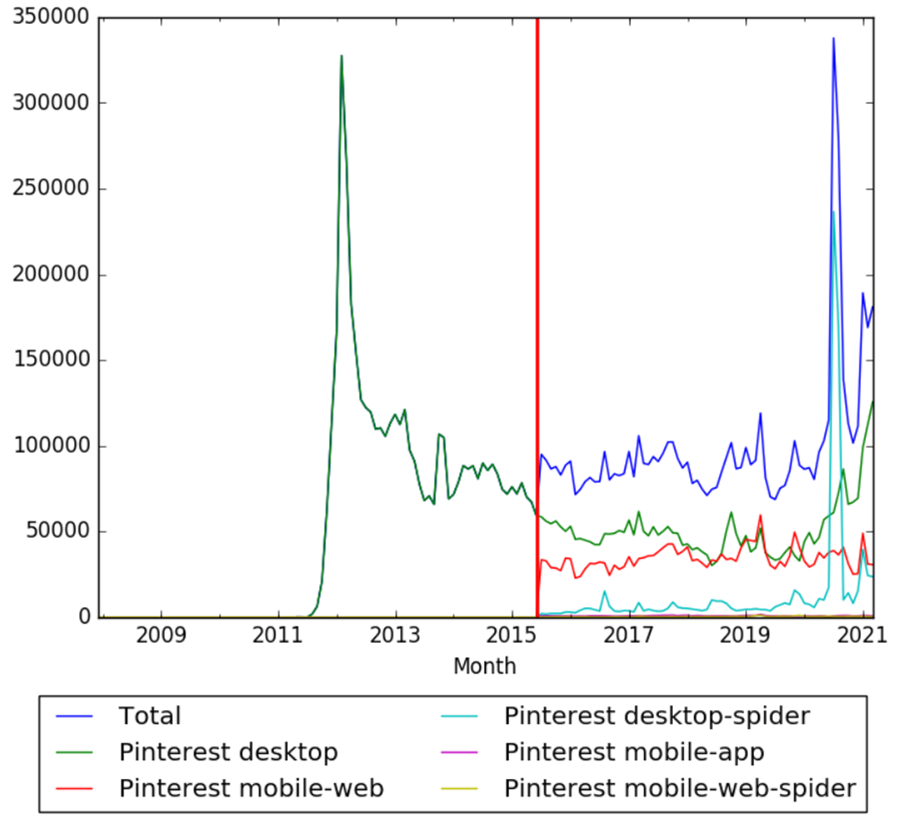
2011-2012: Growth and User Expansion: This period marked exponential growth for Pinterest. In 2011, the platform was named one of Time magazine’s “50 Best Websites of 2011.” The introduction of features like group boards and improved search functionality further enhanced user engagement. By 2012, Pinterest had become a major player in the social media arena, driving substantial traffic to websites and blogs. This surge in popularity highlighted Pinterest’s potential as a powerful marketing tool.
2013-2015: Monetization and Advertising: Pinterest began exploring monetization strategies by introducing promoted pins and other advertising options. This allowed businesses to reach a wider audience and drive sales directly through the platform. The launch of analytics tools provided businesses with valuable insights into user behavior, enabling them to optimize their marketing campaigns. This move towards monetization was crucial for Pinterest’s long-term sustainability.
2016-2018: Visual Search and AI Integration: Pinterest invested heavily in visual search technology, allowing users to discover content based on images they see in the real world. Features like Lens enabled users to take a photo of an object and find similar items on Pinterest. The integration of artificial intelligence (AI) further enhanced the platform’s ability to personalize recommendations and improve user experience.
2019-2020: Emphasis on Creators and Shopping: Pinterest increasingly focused on empowering creators and making the platform a destination for shopping. Features like Shop the Look made it easier for users to purchase products directly from pins. Pinterest also introduced new tools for creators to build their audience and monetize their content, fostering a vibrant and engaged community.
2021-Present: Continued Innovation and Expansion: Pinterest continues to innovate with new features and expand its reach into new markets. The platform is experimenting with new formats like Idea Pins (similar to stories on other platforms) and investing in augmented reality (AR) to enhance the shopping experience. As AI Pin Video Downloader, we observe these trends closely to adapt our tools and services, ensuring our users can seamlessly download and enjoy Pinterest content.
This timeline illustrates the dynamic journey of Pinterest, from its humble beginnings to its current status as a leading social media and visual discovery platform. By understanding these milestones, we gain valuable insights into the platform’s evolution and its impact on the digital world.
Pinterest’s Impact on Social Media and Digital Culture: A Look at Its Influence
Pinterest’s influence on social media and digital culture is undeniable, transforming how people discover, save, and share inspiration and ideas since when was Pinterest created. Beyond its role as a visual discovery engine, Pinterest has reshaped online behavior, impacted e-commerce, and fostered unique communities centered around shared interests.
Visual-First Revolution: Pinterest pioneered the visual-first approach to social media. Unlike platforms initially focused on text-based updates or social networking, Pinterest centered on images and videos as the primary mode of communication. This emphasis on visual content has influenced other platforms, leading to increased integration of images and videos in feeds, stories, and advertising.
Democratization of Curation: Pinterest empowered users to become curators of their own online spaces, allowing them to collect and organize content from across the web into visually appealing boards. This concept of digital curation has been adopted by other platforms, with features like saved posts, collections, and wishlists becoming commonplace. The platform democratized curation and made it accessible to everyone.
Driving E-commerce and Product Discovery: Pinterest has become a powerful tool for e-commerce, with users frequently turning to the platform to discover new products and brands. Features like shoppable pins and product catalogs have made it easier for businesses to connect with potential customers and drive sales. According to Pinterest, 89% of users use the platform for purchase inspiration.
Influencing Design and Aesthetic Trends: Pinterest has a significant impact on design and aesthetic trends across various industries, including fashion, home decor, and food. The platform’s popularity has led to the widespread adoption of certain styles and aesthetics, as users seek to recreate the looks and ideas they find on Pinterest.
Community Building Around Shared Interests: Pinterest fosters the creation of communities centered around shared interests, allowing users to connect with others who share their passions and hobbies. These communities provide a space for inspiration, collaboration, and support, strengthening the platform’s appeal as a social destination.
Shifting the Paradigm of Search: Pinterest altered the search paradigm from one based on keywords to one driven by visual exploration. Users often begin their searches with a broad idea and then refine their search through visual cues, leading to unexpected discoveries and inspiration.
By becoming more than just a social media platform, Pinterest has fundamentally shifted how people find inspiration, shop, and connect with one another online.
Want to dive deeper into Pinterest’s origins? Explore the fascinating history of Pinterest and its evolution as a visual discovery platform.
Pinterest’s Early Days: Comparing It to Other Social Media Platforms of the Time
In its nascent stage, understanding when Pinterest was created involves contrasting it with the dominant social media platforms of the time to appreciate its unique approach to online interaction. Unlike the text-heavy updates of Twitter or the complex social networking of Facebook, Pinterest offered a visually-driven platform centered around collecting and sharing images. This difference set it apart and contributed to its rapid growth and distinct identity in the evolving social media landscape.
Pinterest’s early success stemmed from filling a niche that existing platforms hadn’t fully addressed: visual discovery and inspiration. While Facebook focused on connecting people and sharing personal updates, and Twitter prioritized real-time news and short-form content, Pinterest carved its space by enabling users to curate visual collections of things they loved, wanted, or found inspiring. This visual bookmarking aspect was a key differentiator, offering a different value proposition to users.
A key element setting Pinterest’s early days apart from platforms like MySpace or Flickr was its focus on curation over creation. MySpace allowed extensive user customization and self-expression through personal profiles, and Flickr was primarily a photo-sharing platform for photographers. Pinterest, on the other hand, emphasized organizing and discovering content from across the web, making it a powerful tool for planning projects, gathering inspiration, and discovering new interests.
Furthermore, Pinterest capitalized on the increasing popularity of visual content. As internet speeds improved and mobile devices became more prevalent, users increasingly gravitated toward platforms that prioritized images and videos. This trend favored Pinterest’s visual format, allowing it to attract a large and engaged user base seeking inspiration and ideas. The platform provided a digital scrapbook, encouraging users to collect and categorize images, which resonated strongly with individuals seeking visual organization and inspiration, unlike the largely text-based or socially-driven experiences of its contemporaries.
The Untold Story: Interesting Facts and Trivia Surrounding Pinterest’s Creation
Delving into the history of Pinterest reveals a trove of fascinating facts and trivia surrounding its creation, offering insights beyond the simple when was Pinterest created question. From unexpected inspirations to quirky early features, these untold stories paint a richer picture of the platform’s origins. These little-known details contribute to a better understanding of Pinterest’s unique journey in the social media landscape.
One particularly intriguing detail is the initial name considered for Pinterest. Before settling on Pinterest, the founders experimented with the name “Tote,” envisioning it as a virtual collection of items people wanted to purchase. This early concept highlights the initial focus on e-commerce and collecting things of interest, which later evolved into the broader platform we know today. The shift from “Tote” to Pinterest reflects a significant evolution in the platform’s core identity, moving beyond a simple shopping list to a visual discovery engine.
Another interesting piece of trivia involves the platform’s early user base. In its initial stages, Pinterest struggled to gain traction. To overcome this, the founders personally reached out to bloggers and influencers, encouraging them to use the platform. This hands-on approach and targeted outreach were crucial in building a critical mass of users and establishing Pinterest as a valuable tool for content creators and curators. This targeted strategy demonstrated the founders’ understanding of the power of community and the importance of early adoption in the success of a social media platform.
Furthermore, many are surprised to learn that Pinterest’s early design was heavily influenced by the co-founder Evan Sharp’s background in architecture. The grid-based layout, which is now synonymous with the platform, was inspired by the visual organization and presentation of architectural drawings and mood boards. This design choice not only made the platform visually appealing but also facilitated the easy organization and discovery of content. This architectural influence remains a defining characteristic of Pinterest’s user interface, contributing to its distinctive visual identity.

What Sparked the Idea? Understanding the Inspiration Behind Pinterest
The genesis of Pinterest, and understanding when was Pinterest created, stems from a confluence of personal needs and entrepreneurial observations, not simply a desire to build another social media platform. More precisely, the inspiration behind Pinterest wasn’t a singular eureka moment, but a gradual evolution fueled by the co-founders’ distinct experiences and shared vision.
The initial spark can be attributed to Ben Silbermann’s personal passion for collecting. As a child, Silbermann meticulously amassed collections of insects, stamps, and various other items, finding joy in the organization and sharing of these curated assortments. This personal connection to collecting deeply influenced his thinking and would later become a core element of Pinterest’s design. Furthermore, his time working at Google provided invaluable insights into how users interact with information online and the power of visual search.
Alongside Silbermann, Evan Sharp brought his expertise in design and his own frustrations with the existing methods of visual organization online. Before Pinterest’s inception, Sharp and Silbermann were working on an earlier shopping app called Tote. Although Tote wasn’t a hit, it highlighted the users’ need for collecting and sharing things they liked. This experience provided crucial insights into user behavior and the potential for a platform centered around visual discovery. More precisely, the shortcomings of Tote led to a deeper exploration of the underlying user motivations – namely, the desire to curate, share, and discover visually appealing content – thus, providing a clearer picture of what Pinterest could be.
Pinterest’s Original Name and Branding: A Look Back at Its Initial Identity
Before becoming the visually-driven social media platform we know today, Pinterest’s initial identity was quite different, starting with a name that reflected its core function: connecting people through shared interests and collections. Understanding the evolution of Pinterest’s original branding sheds light on the platform’s journey to becoming the digital powerhouse it is today and provides context for its current design and functionality. This section delves into the platform’s initial moniker and how its early branding laid the groundwork for its eventual success in the realm of social media and visual discovery.
The platform wasn’t always known as Pinterest; its initial name was “Tote,” a name intended to evoke the idea of collecting and carrying around things you love, much like a physical tote bag. This reflected the original vision of the founders: to create a virtual space where users could curate and share their interests. The choice of “Tote” as the original name aimed to capture the essence of personal collections and shared passions, a core concept that underpinned the platform’s early development.
However, the name “Tote” didn’t quite resonate with the broader vision that the founders had for the platform’s future. They wanted a name that was more evocative of the visual pinning aspect and the interconnected nature of shared collections. This led to a rebranding effort, and ultimately, the selection of the name “Pinterest,” a portmanteau of “pin” and “interest,” which more accurately reflected the platform’s purpose and user experience.
The early branding of Pinterest went beyond just the name; it also encompassed the visual design and user interface. The platform’s initial logo and website design were simpler and more understated than the sleek, modern aesthetic it sports today. The focus was on functionality and ease of use, allowing users to quickly create boards and pin images. This minimalist approach was strategic, as it allowed the content to take center stage and encouraged users to explore and discover new interests.
Pinterest Today: How the Platform Has Evolved Since Its Creation
Since its inception, Pinterest has undergone a significant transformation, evolving from a simple visual bookmarking tool to a comprehensive discovery platform. This evolution addresses the question of when was Pinterest created by showcasing its continuous adaptation to user needs and technological advancements. The platform’s current state reflects a commitment to enhancing user experience, expanding its feature set, and solidifying its position as a leading force in social media and e-commerce.
One of the most notable evolutions of Pinterest is its enhanced personalization and recommendation algorithms. Initially, user experience relied heavily on manually curated boards and following specific users or topics. Now, advanced algorithms analyze user behavior, search history, and saved pins to deliver highly relevant and personalized content in their feeds. These recommendations now include “Shop” tabs and personalized product suggestions, directly influencing user purchasing decisions, which has turned Pinterest into a shopping hub.
Another crucial aspect of Pinterest’s evolution is its focus on becoming more business-friendly. The introduction of features like Pinterest Business accounts, Promoted Pins, and analytics dashboards has empowered businesses to reach a wider audience, drive traffic to their websites, and track the performance of their campaigns. Furthermore, Pinterest has invested in tools such as Shop the Look pins and product catalogs, streamlining the shopping experience and enabling users to purchase items directly from the platform.