When Did Pinterest Come Out: The History Of This Visual Inspiration Hub
Here’s a draft of an engaging and SEO-optimized introduction for your “when did pinterest come out” Blog post, tailored to your specific requirements:
Unlocking the history of Pinterest, the visual discovery platform that has reshaped online inspiration and e-commerce, is more crucial than ever in 2025. This Blog post delves into the platform’s origins, exploring its launch date, the founders behind its creation, and the key milestones that shaped its evolution. We’ll uncover the story behind this social media giant, from its initial conception to its current status as a hub for creativity, marketing, and trendsetting, focusing on Pinterest’s early years and its impact on the digital landscape.
Pinterest Launch Date: Unveiling the Origin of the Visual Discovery Platform
The Pinterest launch date, marking the unveiling of this now-ubiquitous visual discovery platform, occurred on March 2010. Understanding when did Pinterest come out helps to contextualize its subsequent rise and impact on social media and online commerce.
Before its official launch, Pinterest underwent a critical beta phase. This period of testing and refinement shaped the platform into the visually engaging experience users know today.
The public launch of Pinterest in March 2010 was a pivotal moment. It introduced a novel approach to content curation and sharing, centered around visual discovery and personal organization. The platform’s innovative interface and intuitive features quickly captured the attention of early adopters.
The Genesis of Pinterest: A Brief History Before the Launch
The story of when Pinterest came out isn’t just about a launch date; it’s rooted in the evolution of an idea, and a previous, less successful venture. Before becoming the visual discovery platform we know today, Pinterest emerged from the ashes of an earlier project called Tote, showcasing the importance of learning from failures and adapting to user needs.
Tote, a mobile app designed to streamline shopping by allowing users to create virtual catalogs of items they liked, ultimately failed to gain traction. Despite its innovative approach to e-commerce, Tote suffered from a lack of focused user engagement. Ben Silbermann, Evan Sharp, and Paul Sciarra, the minds behind Tote, recognized that users enjoyed the collection aspect more than the purchasing process itself. They noticed people were more interested in saving and organizing items than actually buying them, an insight that would prove crucial in the platform’s development.
This pivotal observation led to a strategic shift. Recognizing the core desire for visual bookmarking and personal organization, the team pivoted away from e-commerce and towards a new concept: a platform where users could collect and share images of things they found interesting. This new direction, born from the insights gained from Tote, laid the groundwork for the creation of Pinterest, focusing on the joy of discovery and the power of visual inspiration rather than direct sales.
Pinterest’s Beta Phase: Early Access and User Feedback Before the Public Launch
Before the widespread recognition that Pinterest enjoys today, its journey began with a crucial beta phase, offering early access and gathering vital user feedback, shaping the platform’s trajectory. This initial period served as a testing ground, allowing the developers to refine features, address bugs, and understand how users interacted with the nascent visual discovery platform. This phase was instrumental in ensuring a smoother and more successful public launch, distinguishing Pinterest from other emerging social platforms at the time.
The beta phase was primarily about collecting user feedback to improve the user experience. Pinterest co-founder Evan Sharp emphasized the importance of this stage, noting how direct user input guided the development team in prioritizing features and making necessary adjustments. Instead of relying solely on internal assumptions, the team actively sought to understand what resonated with early adopters and what needed improvement.
This period of early access also helped Pinterest build a core community of dedicated users. Invites were often shared amongst friends and within specific circles, fostering a sense of exclusivity and encouraging active participation. This strategy not only provided valuable insights but also created a foundation of enthusiastic users who would become advocates for the platform upon its official launch. This approach allowed the team to identify and address usability issues, refine the navigation, and optimize the overall user interface based on real-world interactions.
Key Features Launched with Pinterest: What Was Available From Day One?
At its inception, Pinterest offered a set of core features designed to enable users to visually discover, collect, and share content online; these fundamental tools laid the groundwork for the platform’s subsequent evolution. The initial Pinterest experience revolved around pinboards, a digital analog to physical inspiration boards, and simple actions like pinning, repinning, and liking.
The key functionalities present at the initial Pinterest launch included:
Pinboards: The foundational element, allowing users to create themed collections of images. These boards served as visual repositories for organizing and categorizing content, reflecting personal interests and projects.
Pinning: The ability to add images (Pins) from websites or upload them directly to pinboards. This action allowed users to capture and save visual content that resonated with them.
Repinning: A social element enabling users to share Pins they discovered on other users’ boards to their own, fostering content sharing and discovery within the platform.
Liking: A simple way to express appreciation for a Pin, signaling interest and providing feedback to content creators. This feature contributed to the social aspect of Pinterest and helped surface popular content.
Basic Profile Pages: Users could create profiles to showcase their pinboards and followed users, providing a central hub for their Pinterest activity and enabling interaction within the community.
These initial features were instrumental in shaping Pinterest’s early identity as a visual discovery platform, setting the stage for its widespread adoption and subsequent expansion. The simplicity and intuitive nature of these tools proved highly effective in attracting users seeking a curated and visually engaging online experience.

Immediate Impact and Early Reception: How Did Users and Critics React to Pinterest’s Launch?
The initial launch of Pinterest, marking when did pinterest come out, stirred a diverse range of reactions from both users and critics, setting the stage for its subsequent rise as a dominant visual discovery platform. The platform’s unique approach to content curation and sharing through virtual pinboards distinguished it from existing social networks, attracting a specific niche of early adopters while facing skepticism from others. This section delves into the immediate impact and early reception of Pinterest, exploring the user adoption patterns, critical assessments, and initial challenges encountered during its early days.
Initially, Pinterest resonated strongly with a predominantly female audience, particularly those interested in crafts, fashion, home décor, and recipes. The visual nature of the platform made it incredibly appealing for collecting and organizing inspiration, offering a digital alternative to traditional mood boards and scrapbooks. This early traction within specific demographic groups helped Pinterest establish a strong foundation and fueled its initial growth. For example, many early users utilized Pinterest to plan weddings, organize recipes, and curate style inspiration, showcasing the platform’s potential for visual organization and inspiration.
However, the platform also faced some criticism and challenges in its early stages. Some critics questioned the long-term viability of a platform centered around visual content, while others raised concerns about copyright infringement due to the ease with which users could “pin” images from other websites. These challenges prompted Pinterest to implement stricter copyright policies and refine its content moderation practices. In addition, there was also the issue that it was yet another social media competing with the other behemoths already in the landscape.
Furthermore, while the platform attracted a dedicated user base, its relatively slow initial growth compared to other social networks like Facebook and Twitter raised doubts about its mainstream appeal. The platform’s initial reliance on invite-only access also contributed to its gradual adoption rate. Despite these challenges, the core concept of visual curation and discovery proved to be compelling enough to sustain Pinterest through its early years, paving the way for its eventual breakthrough into the mainstream.

Pinterest’s Evolution Since Launch: Key Milestones and Feature Updates
Since its launch, Pinterest has undergone a remarkable evolution, transforming from a simple visual discovery platform into a comprehensive tool for inspiration, shopping, and business promotion. The journey of Pinterest since it came out has been marked by strategic feature updates and key milestones that have significantly shaped its current form and functionality.
The platform’s evolution can be attributed to its continuous adaptation to user feedback and emerging technological trends. Initially, Pinterest primarily focused on visual bookmarking, allowing users to “pin” images from around the web onto virtual boards. Over time, it expanded its features to include:
- Rich Pins: Introduced in 2013, Rich Pins add extra details to Pins, such as real-time pricing for products, movie ratings, or article summaries.
- Promoted Pins: Launched in 2014, Promoted Pins allowed businesses to advertise their products and services directly on the platform.
- Buyable Pins: Introduced in 2015, Buyable Pins enabled users to purchase products directly through Pinterest without leaving the app. This feature streamlined the shopping experience and facilitated e-commerce transactions.
- Visual Search: Launched in 2017, Visual Search allows users to identify objects within a Pin and find similar items or ideas. This technology significantly enhanced the discovery experience, making it easier for users to find what they’re looking for.
- Story Pins: Introduced in 2020, Story Pins (now called Idea Pins) are a multi-page format that allows creators to share ideas, tutorials, and inspiration in an engaging and interactive way. This feature allows for greater depth of storytelling and content creation on the platform.
- Pinterest Predicts: An annual trend report highlighting emerging trends across various categories, providing users and businesses with valuable insights for the upcoming year.
These key milestones and feature updates demonstrate Pinterest’s commitment to innovation and user satisfaction. From enhancing the visual discovery experience to facilitating e-commerce and empowering creators, Pinterest has continuously evolved to meet the changing needs of its users and maintain its position as a leading visual platform. These incremental changes solidified Pinterest’s influence in the digital space following its initial launch.
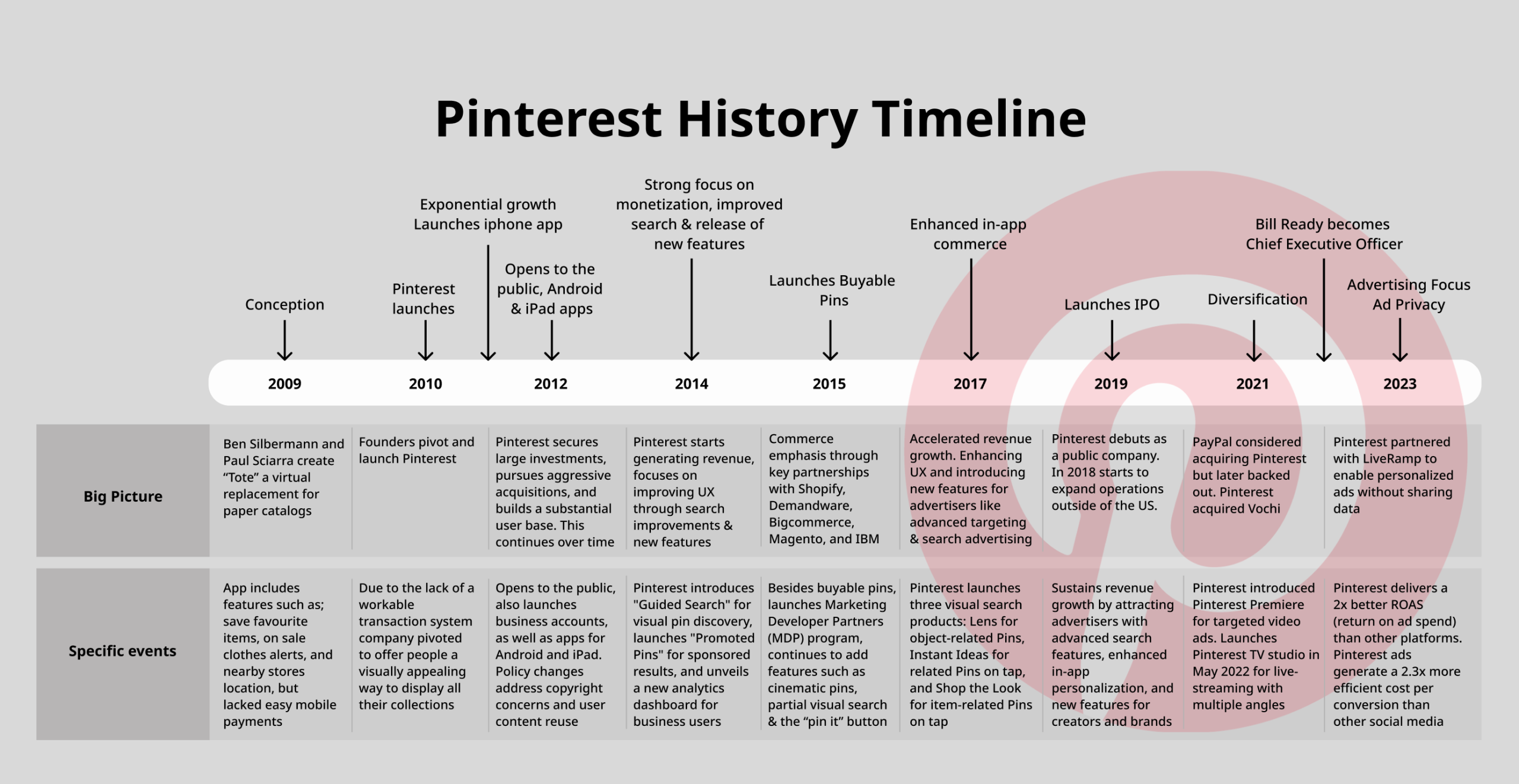
Want to know when Pinterest first emerged and how it became the visual powerhouse it is today? Learn about the platform’s history and journey.
Pinterest’s Founders and Early Team: Who Shaped the Platform’s Initial Vision?
The birth of Pinterest and its innovative concept of visual discovery can be attributed to the vision and dedication of its founders and early team, who played a pivotal role in shaping the platform’s initial direction, even before when did pinterest come out became a common search query. This section explores the key individuals who spearheaded the project and examines how their backgrounds, skills, and shared vision coalesced to create the platform we know today. Their influence extended from the core functionalities to the overall user experience.
Ben Silbermann, Evan Sharp, and Paul Sciarra are the names most closely associated with the founding and early success of Pinterest.
- Ben Silbermann, serving as the CEO, brought his experience from Google’s advertising department, lending a crucial understanding of user behavior and monetization strategies.
- Evan Sharp, as the Chief Creative Officer, focused on the design and user interface, ensuring Pinterest was visually appealing and easy to navigate. His background in architecture significantly shaped the platform’s aesthetic.
- Paul Sciarra, while later transitioning out of a day-to-day role, contributed significantly to the initial product development and strategic direction.
The initial vision for Pinterest was rooted in a desire to create a virtual pinboard that allowed users to collect and organize things they loved. The early team recognized the potential for a platform that went beyond simple social networking, focusing instead on personal discovery and inspiration. This differed significantly from the social networking landscape at the time. Their small, dedicated team worked tirelessly to refine the product based on user feedback, iterating on features and functionality to create a seamless and engaging experience.
The founders’ complementary skills and shared passion were crucial to Pinterest’s initial growth. Silbermann’s business acumen, coupled with Sharp’s design expertise, and Sciarra’s product focus, provided a balanced foundation for the company’s development. Their commitment to user-centric design and continuous improvement laid the groundwork for Pinterest’s long-term success in the ever-evolving social media landscape, answering the questions surrounding Pinterest launch.
Comparing Pinterest’s Launch to Competitors: What Made It Stand Out?
The launch of Pinterest marked a significant shift in the social media landscape, distinguishing itself from competitors with its visually-driven, curated content discovery approach. While platforms like Facebook and Twitter focused on social networking and real-time updates, Pinterest carved a niche by emphasizing visual bookmarking and inspiration, offering a unique user experience centered around collecting and organizing ideas. This difference in approach immediately set Pinterest apart and contributed to its rapid growth and dedicated user base.
One key differentiator was Pinterest’s focus on visual content. Unlike Facebook, which heavily relied on text-based status updates and social interactions, or Twitter, known for its concise text-based tweets, Pinterest prioritized images and videos. This visual emphasis resonated with users seeking inspiration, ideas, and curated content in various categories like fashion, home decor, recipes, and travel. The platform’s interface encouraged users to “pin” images they found online, creating visual collections organized into themed boards.
Another aspect that set Pinterest apart was its emphasis on curation and organization. While other social media platforms often presented content in a chronological feed, Pinterest allowed users to actively curate their own visual collections, reflecting their personal interests and preferences. This curation feature provided a sense of control and personalization that was lacking in many competing platforms, enabling users to build visually appealing mood boards and idea catalogs. For example, a user planning a wedding could create a board to collect inspiration for dresses, decorations, and venues, effectively organizing their ideas in a single, visually appealing space.
Finally, Pinterest’s discovery engine played a crucial role in its early success. The platform’s algorithms were designed to recommend relevant pins based on user interests and browsing history, making it easy for users to discover new ideas and products. This discovery aspect was a significant departure from platforms where content visibility largely depended on social connections. The focus on personalized recommendations ensured that users were constantly exposed to new and relevant content, encouraging them to explore and engage with the platform.
The Role of Technology in Pinterest’s Launch: What Innovations Enabled the Platform?
The successful launch of Pinterest, pivoting from a shopping app called Tote, hinged significantly on technological innovations that facilitated visual discovery and sharing, solidifying its position as a novel platform distinct from existing social networks when when did pinterest come out. The platform’s reliance on image hosting services, coupled with a user-friendly interface and innovative pinning mechanism, proved critical to its early success.
Several technological advancements played a vital role in Pinterest’s early achievements. Image hosting infrastructure was essential, enabling users to upload and store large numbers of images. Furthermore, the intuitive design of the platform, accessible across multiple devices, ensured a seamless user experience. The pinning mechanism itself, allowing users to easily save and organize images from across the web, represented a key innovation that simplified the process of visual curation. The platform further distinguished itself by providing functionalities for content organization, such as boards to group Pins around user-defined themes.
The use of AJAX (Asynchronous JavaScript and XML) allowed for dynamic updates of the Pinterest feed without requiring full page reloads, contributing to a smoother browsing experience. This, coupled with efficient image compression techniques, ensured faster loading times, especially crucial for users with varying internet speeds. Furthermore, sophisticated algorithms for image recognition and categorization, though rudimentary initially, enabled Pinterest to suggest related pins and boards to users, thereby enhancing discovery.
Here’s the H2 content:
The Legacy of Pinterest’s Launch: How Did It Change the Social Media Landscape?
The launch of Pinterest significantly reshaped the social media landscape, moving beyond simple social networking to establish a visual discovery platform that altered how users interact with content and brands online. Prior to Pinterest’s arrival, social media was dominated by status updates, text-based interactions, and photo sharing primarily focused on personal connections. The introduction of a platform centered around curated visual content and personal interests marked a paradigm shift in online engagement.
Pinterest’s influence is evident in several key areas.
- Firstly, it popularized the concept of visual bookmarking, allowing users to collect and organize ideas, inspirations, and products in a visually appealing manner. This focus on curation distinguished it from platforms like Facebook and Twitter, where content streams were often dictated by social connections and real-time updates.
- Secondly, Pinterest fostered a new form of online shopping and product discovery. By enabling users to easily save and share products they found interesting, Pinterest became a powerful tool for brands to reach potential customers and drive sales. The platform’s emphasis on visual merchandising revolutionized e-commerce and content marketing strategies.
- Thirdly, Pinterest redefined the role of images and visual content in social media. Whereas before, images were mostly used to enhance personal stories or illustrate social interactions, Pinterest elevated the visual to become the primary driver of engagement. This led to increased investment in high-quality visuals across all social media platforms, affecting everything from Instagram’s rise to the visual storytelling formats adopted by Facebook and Snapchat.
The emphasis on visual content also influenced content creation, shifting the focus towards visually appealing and engaging materials. Brands and content creators began investing more resources into creating high-quality images and videos optimized for platforms like Pinterest, understanding the power of visual storytelling in capturing audience attention. In essence, the launch of Pinterest catalyzed a visual revolution in social media, leaving a legacy that continues to shape how people discover, share, and engage with content online, demonstrating that the intersection of discovery and visual appeal can redefine how social media functions.